Industrial Dehumidifiers: Unlocking Peak Efficiency and Sustainability in Your Operations
- Share
- Issue Time
- Aug 25,2025
Summary
Humidity is an operating cost, not a comfort setting. This engineering guide shows how industrial dehumidifiers cut energy use, protect equipment and support sustainability — with RH targets by industry, refrigerant vs desiccant selection, a 5-step sizing method, and real SDI-480L performance data from the EAST team.
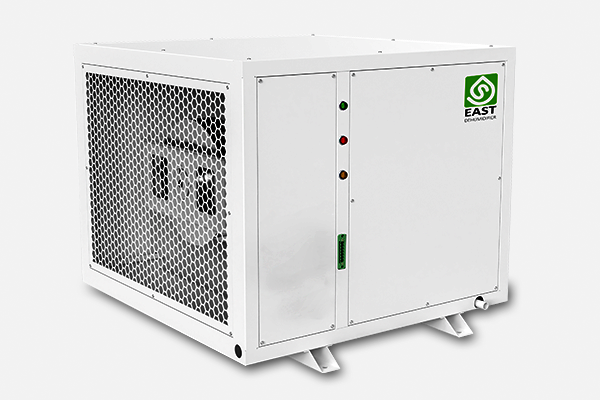
In most plants, humidity is treated as a comfort setting. It is closer to an operating cost. Uncontrolled moisture quietly corrodes equipment, feeds mold, lengthens drying cycles and forces HVAC systems to fight a latent load they were never sized for. Here is what published standards, field data and our own production experience say about turning humidity control into measurable gains.
Quick Answer
For most industrial spaces, hold relative humidity between 40% and 60% RH. Below roughly 50% RH, steel corrosion slows sharply; above 70% RH, corrosion rates multiply and mold can establish within 48 hours at 25 °C. A correctly matched refrigerant dehumidifier removes moisture at about 0.4–0.6 kWh per litre in warm conditions — usually far cheaper than letting chillers and reheat handle the latent load.
Why Humidity Is an Efficiency Problem, Not a Comfort Issue
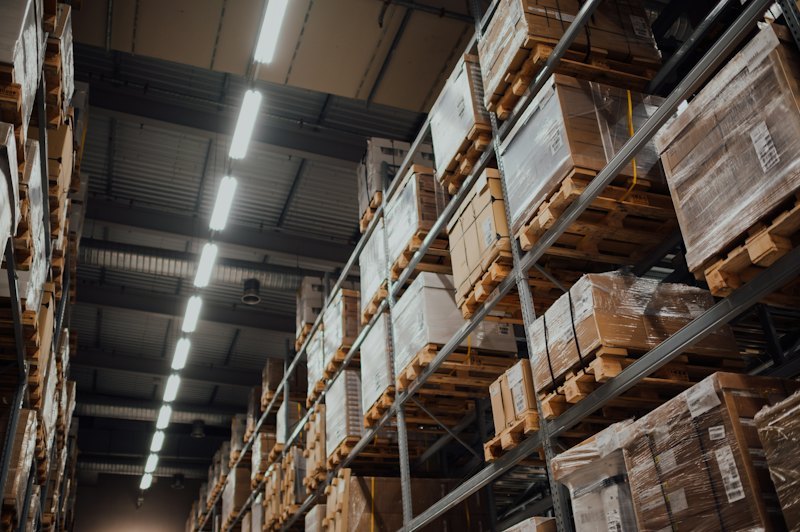
Steel begins to corrode measurably once relative humidity climbs past about 50%, and the relationship is exponential, not linear. Published corrosion studies show carbon steel rusting 10–100 times faster at 80% RH than at 50% RH, and insulation materials lose resistance as moisture films form on surfaces. Mold follows a similar curve: at 25 °C and 80% RH, visible growth can appear within 48 hours.
Every one of these failure modes carries a cost line: rework, scrap, warranty claims, motor rewinds, cleaning and compliance. The second cost is thermal: moist air carries latent heat, so chillers burn extra energy condensing water they were never designed to remove. A dedicated industrial dehumidifier takes that load off equipment that handles it inefficiently.
| Relative humidity | Corrosion rate vs. 50% RH | Time to visible rust |
|---|---|---|
| 50% RH | 1× (baseline) | 30+ days |
| 65% RH | 3–5× | 10–15 days |
| 80% RH | 10–20× | 2–5 days |
| 95% RH | 50–100× | 12–24 hours |
Corrosion escalation with relative humidity, compiled from published corrosion studies and NATO maintenance research.
Refrigerant or Desiccant? Match the Technology to Your Conditions
Two technologies dominate industrial dehumidification, and choosing the wrong one is the most common specification error we see. Refrigerant (coil-based) units cool air below its dew point and condense water out. They are the most energy-efficient option in warm, humid conditions — roughly 0.4–0.6 kWh per litre removed in the 15–35 °C range. Desiccant units pass air through a silica-gel rotor and regenerate it with heat. They consume more energy per litre, but hold their capacity in cold rooms and reach dew points that coils physically cannot — ASHRAE treats desiccant as the answer once process dew points drop below what chilled surfaces can achieve.
| Criterion | Refrigerant | Desiccant |
|---|---|---|
| Working principle | Condensation on cold coils | Adsorption on silica-gel rotor |
| Best temperature range | 15–35 °C | −20 to +50 °C |
| Energy per litre removed | 0.4–0.6 kWh | 0.6–0.9 kWh |
| Low-temperature behavior | Capacity drops below 15 °C; defrost cycles | Stable capacity, no defrost |
| Practical dew point floor | Around 10 °C dew point | Below 0 °C dew point |
| Best fit | Warehouses, packaging, general plant | Cold storage, pharma, low-dew-point processes |
Technology comparison — typical industry benchmarks at rated conditions, not site guarantees.

Rule of Thumb
If your space ever drops below 15 °C, or your process needs a dew point below 0 °C, specify desiccant. Otherwise a refrigerant unit is usually the lower-cost choice — in consistently warm halls, desiccant systems can consume 30–50% more electricity per litre extracted.
Where the Savings Actually Come From
Dehumidifier payback rarely comes from the electricity meter alone. It comes from four compounding sources:
- Latent load relief. Chillers and air handlers stop condensing moisture out of the air — usually the single largest lever, because removing heat is what cooling plant does expensively.
- Faster, more stable processes. Stable RH shortens drying, curing and coating cycles and cuts condensation rejects on cold surfaces such as molds and chill-room ceilings.
- Longer asset life. Electrical rooms held below about 60% RH keep insulation resistance high and switchgear dry — in NATO storage trials, PVC insulation resistance fell by orders of magnitude as RH rose past 60%.
- Less waste. Fewer spoiled batches, rusted spares and warranty claims traced back to moisture damage found after delivery.
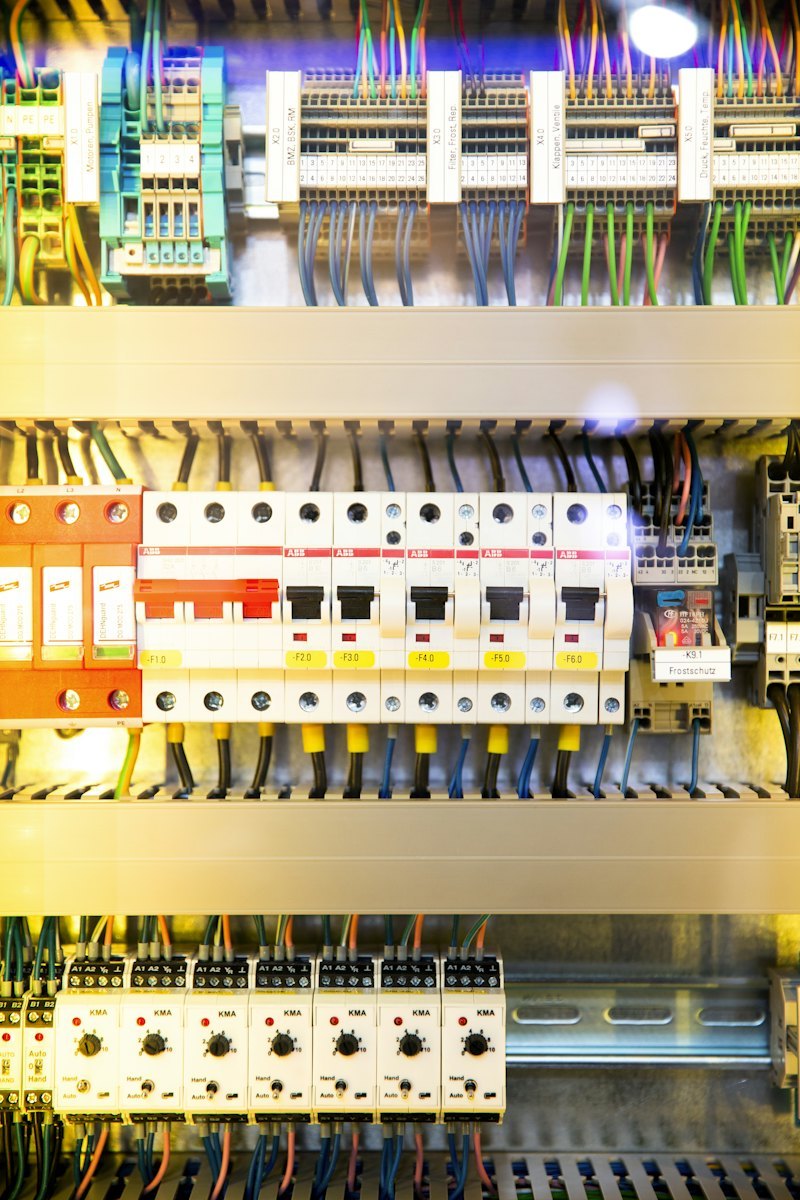
The electrical angle is easy to underestimate: condensation inside panels and on windings degrades insulation, causes tracking faults and shortens motor life. Keeping the room dry is cheaper than rewinding the machine.
Application Targets: What Each Environment Needs to Hold
Targets differ by industry — and over-specifying wastes energy just as under-specifying invites risk. Use these as starting ranges, then refine against product requirements.
| Environment | Typical RH target | Primary risk if uncontrolled |
|---|---|---|
| General warehousing | 40–60% | Rust on stock, packaging failure, caking |
| Food & beverage | 45–60% | Condensation, mold, hygiene non-compliance |
| Pharma & supplements | 30–45% | Hygroscopic actives degrade; tablet defects |
| Electronics assembly | 40–50% | Electrochemical migration, short circuits |
| Cold storage & transition zones | Dew-point driven (desiccant) | Frost, coil icing, capacity collapse |
Starting ranges based on published industry guidance — validate against your own specs.
Specifying a Unit: Five Checks Before You Buy
Size the real moisture load. Count infiltration, door openings and product moisture, not just air volume. Active door traffic can multiply the theoretical figure several times over.
Match technology to your coldest day. Capacity that disappears in winter is capacity you do not have — check performance at your lowest operating temperature.
Ask for ratings at your conditions. Capacity quoted at 30 °C/70% RH says little about a 26 °C/60% RH hall. Request test data at your actual operating point.
Verify electrical compatibility. 380 V/50 Hz and 460 V/60 Hz share the same V/Hz ratio (about 7.6), but keep supply voltage unbalance within 1% — NEMA MG-1 derates motors to 98% at 1% unbalance and 92% at 2%.
Plan controls and monitoring. Humidistat control plus BMS integration lets the unit run only when needed — which is where most of the energy saving actually lives.
Worked Example: EAST SDI-480L Floor-Mounted Unit
| Parameter | Value |
|---|---|
| Dehumidification capacity | 480 L/day |
| Process airflow | 5,600 m³/h |
| Rated power | 6.7 kW |
| Rated current | 11.0 A per phase (380 V / 50 Hz) |
At rated conditions the SDI-480L removes roughly 3 litres of water per kilowatt-hour consumed. In a warm, humid season that moisture would otherwise land on your cooling plant — which removes it at a worse coefficient of performance. For sizing help, send our engineering team your space volume, temperature range and door traffic.
Maintenance Habits That Protect Efficiency
A dehumidifier that runs but does not extract is the most expensive kind. Five habits keep the rated performance you paid for:
- Clean or replace air filters monthly. Blocked airflow raises power draw without improving extraction.
- Inspect coils quarterly. Fouled evaporator and condenser coils quietly erode capacity and efficiency.
- Keep condensate drains clear. Standing water re-evaporates straight back into the space you are drying.
- Calibrate humidity sensors annually. A drifting sensor silently moves your entire control point.
- Log operating data. Runtime trends flag fouling and refrigerant loss long before failure.
Frequently Asked Questions
What humidity should I hold in a warehouse?
For most goods, 40–60% RH is the sweet spot: below 60% RH, steel corrosion stays near baseline and mold risk is low. Go drier only when products demand it, because every extra point of dryness costs energy.
How much electricity does an industrial dehumidifier use?
It scales with capacity: units span roughly 1.2 kW (50–80 L/day) to 6 kW and above (250+ L/day). Judge efficiency in litres per kilowatt-hour — 2–3 L/kWh is a healthy figure for a refrigerant unit at rated conditions.
Will a dehumidifier work in a cold room?
A standard refrigerant unit loses capacity below about 15 °C and loses more time to defrost cycles. Below that threshold, a desiccant machine is the correct technology — it holds rated capacity down to −20 °C.
Is the operating cost worth it?
For storage protection, published industry estimates put total operating cost — electricity plus maintenance — at well under 1% of the value of the goods protected per year, before counting a single avoided loss.
Key Takeaways
- Hold 40–60% RH for general spaces; corrosion and mold costs both stay low in that band.
- Refrigerant for warm halls, desiccant below 15 °C or for sub-zero dew points.
- Size for real infiltration and door traffic, and demand ratings at your own conditions.
- The payback compounds: less latent load, less scrap, longer asset life, lower energy.
Browse the EAST industrial dehumidifier range, or read more technical guides from our engineering team.