How does a hybrid unit combine a desiccant rotor with condensing technology?
- Share
- Issue Time
- Sep 14,2026
The two technologies sit in series on one air stream. Air crosses the evaporator first, where it is cooled and about 60% of its moisture condenses to a drain; it then crosses the rotor, which adsorbs the remainder down to about 0.1 g/kg. Condenser heat is recovered to pre-heat the reactivation air, so the rotor's heater — normally the biggest energy user — runs on partly free heat.
The four couplings that make it work
Latent coupling
The coil takes the water that is easy to remove. Condensing is cheap per kilogram while the air is wet; sorption costs roughly 1.0–3.0 kWh per kilogram regardless, so every kilogram shifted to the coil is a kilogram the heater does not pay for.
Sensible coupling
Air leaving the evaporator is cold. A rotor adsorbs better cold, so the coil is not fighting the wheel — it is preparing the air for it. Reheat, where needed, comes from condenser heat rather than a new energy source.
Heat recovery
Recovery coils transfer condenser heat into the reactivation stream. On machines without recovery this is the single biggest efficiency gap; with it, the heater only has to lift the air the last few tens of degrees.
Control coupling
Two actuators are coordinated against one dew point sensor: compressor capacity handles bulk load swings, reactivation heat trims the final dew point. Turndown is far wider than either technology alone.
What the air actually experiences
Follow one cubic metre of summer make-up air through the machine. It enters at 30 °C and 70% RH carrying about 19 g of water. The evaporator drops it to around 10 °C, and 11.4 g of that water runs out of the drain as liquid. The rotor then removes a further 7.5 g, leaving roughly 0.1 g — the −40 °C dew point a battery dry room asks for.
The arithmetic is the whole argument. Sixty per cent of the water was removed by a compressor running at a coefficient of performance of three to five; only forty per cent was removed by a resistance heater running at a coefficient of performance below one.
The limits worth knowing
Two technologies in one casing means two sets of things to go wrong: refrigerant charge, condensate trap and coil fouling alongside wheel seals, heater elements and drive belts. The coil also has a floor — below about 5 °C it starts to frost, so the evaporator cannot simply be pushed colder to take more load, and the machine still needs a drain and a trapped, insulated condensate line. In freezing ambient conditions the drain is a real liability.
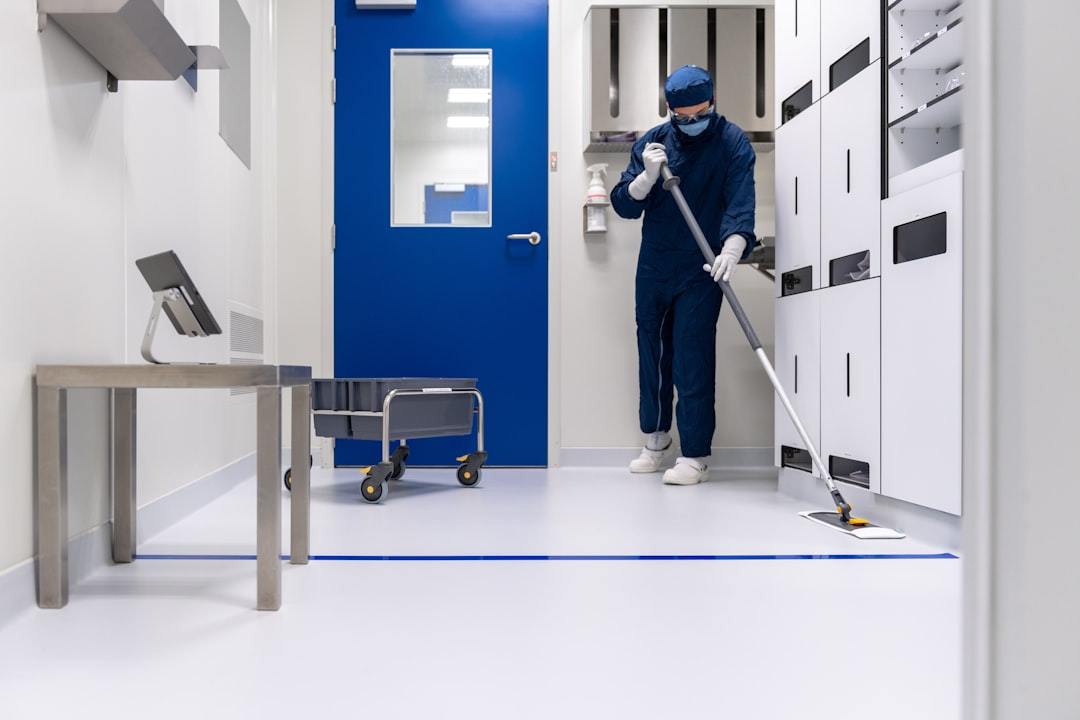

Representative project configuration
A coating line needed continuous make-up air at −35 °C dew point with full fresh air, on a site where summer design is 32 °C / 65% RH and winter falls to 2 °C.
Winter was the harder case: the coil has little sensible load but the rotor still needs the same reactivation energy, so the heater was sized for January, not July. East Dehumidifier states the design-day pair a guarantee is based on — asking for that pair is the quickest way to compare two quotes honestly.
Stage by stage
| Stage | What it removes | Energy mechanism | Typical COP | Leaves the air at |
|---|---|---|---|---|
| Evaporator | 11.4 g/kg as liquid | Vapour compression | 3–5 | 10 °C, saturated |
| Condenser / recovery | Nothing — moves heat | Heat rejection, recovered | Free | Reheated supply or reactivation |
| Rotor process sector | 7.5 g/kg by adsorption | Sorption, exothermic | — | 0.1 g/kg, warmer |
| Rotor reactivation | Strips the wheel | Electric, steam or gas heat | <1 | Exhausted outdoors |
Design note: the economics come entirely from shifting water from the bottom row to the top row. Anything that reduces coil performance — fouling, low airflow, a failed drain — pushes it straight back onto the heater.
Related questions
Need the state points?
Send your summer and winter design conditions and target dew point. East Dehumidifier will return the full state-point table for the proposed machine.