Can a condensing dehumidifier run continuously in low-temperature environments?
- Share
- Issue Time
- Sep 17,2026
A condensing dehumidifier runs continuously between 5 and 35 °C, but output falls below roughly 15 °C and the coil ices near 5 °C. Defrost then pauses extraction for several minutes every half hour or so, halving net capacity. For permanent duty below 5 °C choose a desiccant rotor machine, which keeps working down to around 1 °C and below.
What happens as the air gets colder
Less water in the air
Cold air holds far less moisture. At 20 °C and 60% RH air carries roughly 8.7 g/kg; at 5 °C and 90% RH it holds barely 5 g/kg. Even a perfectly running machine has less to remove, so litres per day drop for reasons that have nothing to do with the machine.
The coil crosses freezing
To condense that water the evaporator must sit below the air dew point. Once the coil surface drops below 0 °C the condensate freezes onto the fins instead of draining, and that ice layer insulates the coil and blocks airflow.
Defrost takes over
Controls watch an evaporator sensor. Typical logic switches to defrost when the sensor reads about 5 °C, either stopping the compressor or reversing hot gas through the coil, then resumes once the coil is clear. Every defrost minute is a minute of no water removal.
Protection limits duty
Anti-short-cycle timers force roughly three minutes between compressor stops and starts, and most machines cut out outside their band to protect themselves. These are not faults; they are why net capacity in a cold room can be half the nameplate figure.
Where low-temperature operation still makes sense
Cold rooms between roughly 8 and 16 °C are the workable grey zone. Manufacturers publishing correction factors for this range suggest taking about 0.5–0.6 of the rated capacity, so a 180 L/day unit realistically delivers 90–110 L/day. That is acceptable when the load is modest, when duty is seasonal, or when the alternative — a desiccant rotor machine with its reactivation heater — cannot be powered on site.
Hot-gas defrost matters more than extra capacity here. Reversing hot refrigerant through the evaporator clears ice in minutes rather than the tens of minutes a passive stop-and-wait cycle takes, keeping far more of every hour productive. Specifying it is usually cheaper than oversizing by half again.
The limits worth knowing
Below about 5 °C this stops being an economics question. Standard condensing machines shut down to protect the evaporator, low-temperature portable designs bottom out near −5 °C, and unheated freezer vestibules and cold stores belong to desiccant rotor dehumidification regardless of how much capacity you buy. Energy per litre removed also rises steeply as coil temperature falls, so the cheapest-looking option in a cold room is rarely the cheapest to run.
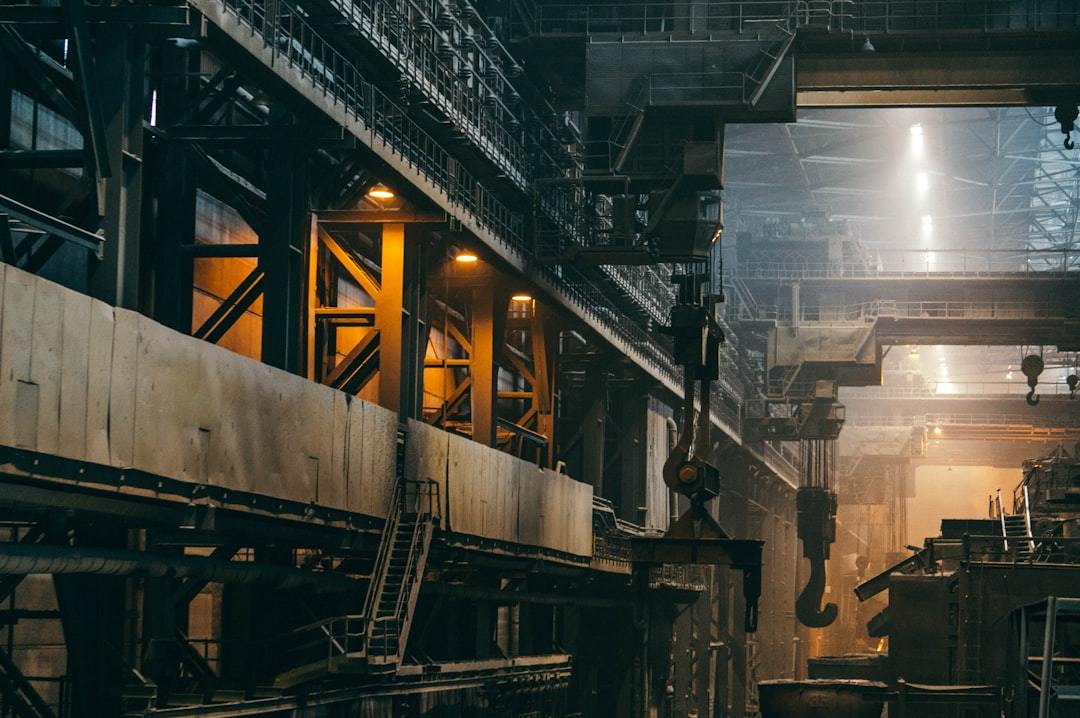

Representative project configuration
A dispatch lobby between a cold store and the loading doors was fogging every time a door opened, with ice forming on the floor near the threshold. The site had single-phase power only, which ruled out a large desiccant plant.
Units were sized on the corrected figure rather than the nameplate, and condensate left through a trapped line routed inside the insulated envelope. Below +5 °C the same duty would have needed rotor technology; East Dehumidifier will say so rather than sell a machine that ices. Results depend on door traffic and envelope leakage.
Net capacity against entering air temperature
| Entering air condition | Approx. capacity vs rating | Machine behaviour | Recommendation |
|---|---|---|---|
| 30 °C / 80% RH | 100% | Continuous duty, no defrost | Condensing is optimal |
| 20 °C / 60% RH | 70–80% | Long cycles, no icing | Condensing |
| 15 °C / 70% RH | 45–60% | Occasional defrost | Condensing with hot-gas defrost |
| 8–10 °C / 75% RH | 30–45% | Frequent defrost every 30–60 min | Marginal — check the payback |
| 5 °C and below | Below 30% | Ice on the coil, protective cut-outs | Switch to desiccant rotor |
Sizing rule: take the coldest entering condition you must hold, apply the derating factor, and check that the corrected figure still covers the load before comparing prices. Manufacturers state their own operating limits, so read the band printed for that model rather than a range quoted by a distributor.
Related questions
Not sure your room is warm enough?
Send the lowest ambient temperature you must hold and the target RH. East Dehumidifier will tell you whether a condensing machine can do it or whether rotor technology is the honest answer.