How do you handle condensate drainage for a ceiling mounted dehumidifier?
- Share
- Issue Time
- Sep 17,2026
Ceiling units drain two ways. Gravity: a 3/4 in line, roughly 20 mm, with a continuous fall of at least 1% straight to a trapped gully, and a trap deep enough to beat the fan suction on the pan. Pump: where no lower drain exists, a condensate pump lifting around 4.5–6 m, interlocked to an overflow switch that stops the unit.
Gravity first, pump second
Gravity drainage is preferred because nothing has to fail for it to work. Use rigid pipe where possible, keep every section falling towards the outlet, support it so it cannot sag, use fewer rather than more bends, and end with an air break above a trapped gully rather than a sealed joint into the waste line. Confirm the route against beams and other services while the ceiling is open — that is the stage where the fall gets lost.
The trap is the part installers get wrong. Where the pan sits on the suction side of the fan it is under negative pressure; if the trap is too shallow, that pressure simply holds the water in and the pan overflows instead of draining. Trap depth must exceed the negative pressure at that point, expressed as a water column. A trap sized for a positive-pressure arrangement is wrong for this one.
Pumps exist for the cases gravity cannot solve: long horizontal runs, no drain below the unit, or a sewer above the slab. Choose one with a float or overflow switch wired to stop the machine, because an unalarmed pump failure is a ceiling leak over whatever is below.
The limits worth knowing
Failure consequences should be designed for, not assumed. Above a food line, a switchroom or a planted bed, budget for redundancy and leak detection. Freezing is the other silent killer: any section running through unheated space needs heat tracing or rerouting inside the envelope, since a frozen line backs water into the pan and then into the ceiling.
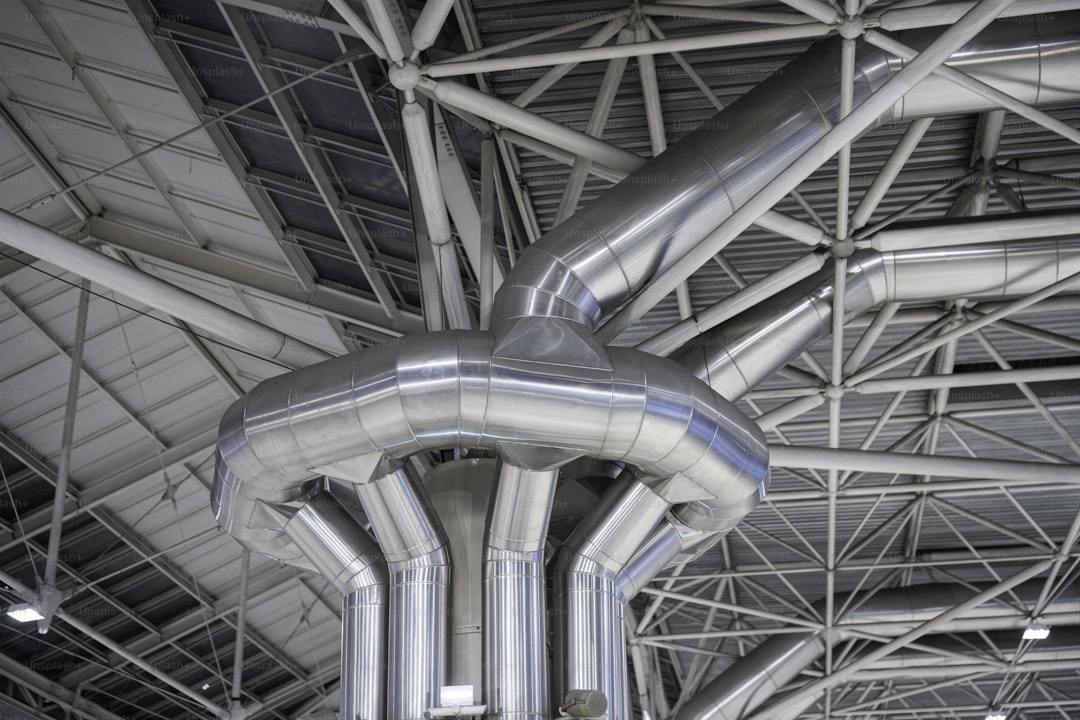
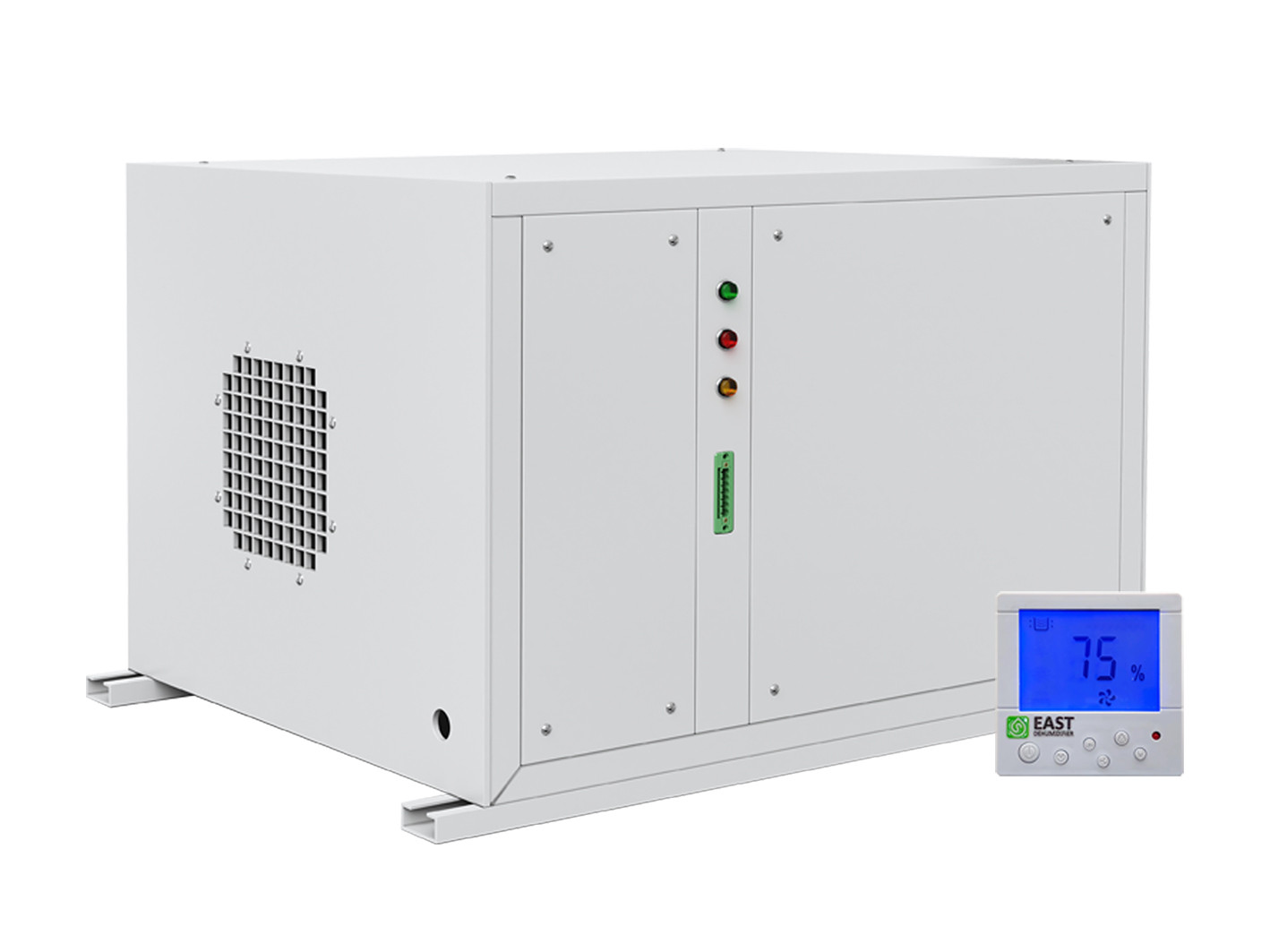
Representative project configuration
A collection store sat directly above a public gallery with no floor drain below it and the nearest soil stack 11 m away. The target was 50% RH ±3% and a leak was not survivable.
Pump discharge was routed in rigid pipe with its own trap and an access hatch above it. East Dehumidifier treats the pump as the weak link in any pumped scheme and specifies secondary containment wherever a failure would reach occupied or sensitive space.
Drainage decisions and the numbers behind them

| Decision | Typical value | What happens if it is wrong |
|---|---|---|
| Slope, gravity | ≥1% continuous; aim for 1–2% | Standing water, air lock, pan overflow |
| Connection size | 3/4 in, roughly 20 mm drain outlet | Slow discharge and blockage |
| Trap depth | Deeper than the fan suction in mm water gauge | Negative pressure holds the trap empty; pan overflows |
| Gravity run | Keep short, ideally under about 8 m with few bends | Sags trap water, long runs block |
| Pump lift | Commonly 4.5–6 m vertical | Water backs up into the pan |
| Pump protection | Float or overflow switch interlocked to stop the unit | Ceiling leak with no alarm |
| Unheated sections | Heat trace or reroute inside the envelope | Frozen line, then overflow |
| Access | about 450×450 mm hatch at pan, trap and filters | An unreachable trap is never cleaned |
Commissioning step people skip: pour a litre of water into the pan and watch it leave. An arrangement that drains on paper can still air-lock, sag or hold on a shallow trap, and the first sign otherwise is a stained ceiling tile.
Related questions
Need a drainage scheme?
Send ceiling height, drain position and whether any run passes through unheated space. East Dehumidifier will return a gravity or pumped scheme with trap depths and access marked.