Can one hand push dehumidifier serve multiple rooms or job sites?
- Share
- Issue Time
- Sep 17,2026
Yes, if you rotate it. One hand push unit can serve several rooms in sequence as long as each is closed off and given time to pull down: typically 12–48 hours per zone for 80–150 m², moving when the RH reading stops falling. Above roughly 180–200 L/day of continuous load per zone, or where several rooms must be held at once, two smaller units dry faster.
How to run one machine across several spaces
Close the envelope
A portable machine only wins against infiltration if doors and windows are shut and local exhaust is off. Open windows defeat any capacity; this is the cheapest part of the plan and the most often skipped.
Sequence by load
Start with the wettest zone, not the nearest one. Deep moisture in screed, plaster or stored goods migrates back to the surface, so a room that looks dry after eight hours will rebound unless it gets enough dwell time.
Move on data
Move when the RH fall flattens, typically once it drops below about 1–2% over a 12-hour period. Logging every 15–30 minutes makes that call obvious and gives evidence if the drying programme is ever questioned.
Keep services simple
A hose to a common drain point and a 24-hour timer let the unit run unattended in each position. Plan the route so relocating does not mean rebuilding the drainage every time.
Where one machine stops being enough
There is a hard economic line. Once the continuous load in a single zone exceeds roughly 180–200 L/day, or the space has to be held while others are being served, adding a second mobile unit beats working one harder — and for permanent multi-zone duty a fixed or ducted system is cheaper to run per litre removed. Sending one machine around six rooms also means five rooms are uncontrolled at any moment.
A single unit discharging and drawing air at the same point short-circuits in a long room, leaving stale corners. Flexible ducting from the outlet, laid along the coldest wall or behind racking, fixes this for one machine and costs very little.
The limits worth knowing
Rotation is not free. Every move restarts the pull-down, and the moisture stored in materials rather than in the air means a room can look done and rebound overnight. If a process or a stored product cannot tolerate that rebound, one shared machine is the wrong answer regardless of the utilisation numbers. Below about 5 °C the same machine also stops being effective at all.
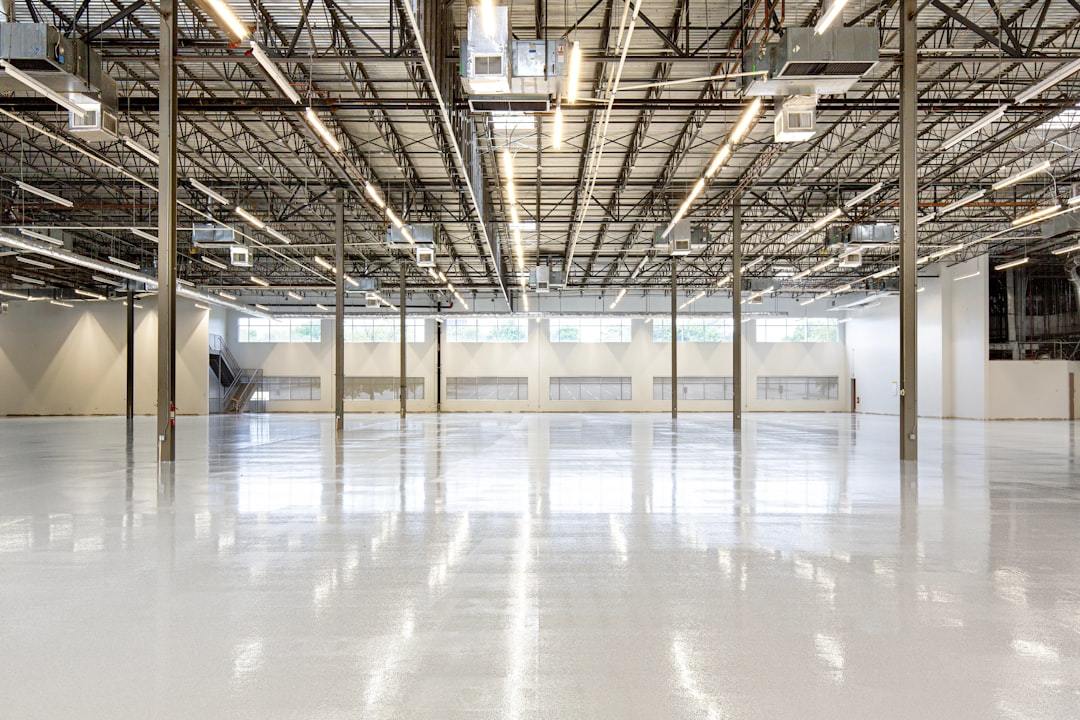
Representative project configuration
A contractor covering water-damage work across two buildings in the same week needed to keep three machines productive rather than parked. Both sites had floor drains and single-phase power.
Moves were triggered by logged RH rather than by the calendar, and each machine carried its own hose and power lead so relocation took under fifteen minutes. East Dehumidifier sizes a rotating fleet on the wettest zone, not the average, so the machine that arrives first is never undersized.
Rotation planning numbers
| Situation | Dwell per zone | Units needed | Note |
|---|---|---|---|
| Surface damp after a leak, 80 m² | 12–24 h | 1 per 2–3 rooms | Move on RH trend, not hours elapsed |
| Wet screed or plaster, 120 m² | 36–72 h | Plan two visits | Material moisture migrates back |
| Seasonal storage bay, 150 m² | Continuous during the season | Dedicated unit | Rotation costs more than a second machine |
| Multiple job sites in one week | 1–3 days per site | Transport-ready chassis | Check the 3-minute restart delay each time |
Decision rule: if a zone needs holding rather than drying, it needs its own machine. Rotation is for pull-down duties, not for maintaining a specification.
Related questions
Planning a rotating fleet?
Send the zone list with volumes and starting conditions. East Dehumidifier will size for the wettest zone and tell you how many units the programme actually needs.