Split vs packaged dehumidifier: which is better for large industrial spaces?
- Share
- Issue Time
- Sep 17,2026
For large industrial spaces, packaged units win on capital cost and simplicity; split systems win on indoor noise and heat rejection. A packaged machine typically costs less for the same rated capacity because there is no remote condensing unit. Choose split when the room cannot accept compressor heat or noise, or when the process needs independent temperature and humidity control.
The four dimensions that separate them
Coverage and capacity
Both scale to very large duties; published industrial ranges run from a few hundred to well over 2,000 pints/day in either configuration. What differs is how the air is delivered: a packaged unit serves one point or a ducted zone, while a split system can be split again across indoor units in adjacent zones.
Installation flexibility
Packaged units arrive factory-tested and pre-assembled, so site work is positioning, ducting and power. A split system needs refrigerant pipework by a qualified installer, with line length and vertical lift checked at design stage — a late change there is expensive.
Noise and heat
This is where split earns its premium. With the compressor outdoors, indoor sound stays low and compressor heat leaves the building instead of adding to the cooling load — decisive in manned halls, pool enclosures and anywhere summer overheating is already a problem.
Capital cost
Packaged is cheaper for equal capacity because there is no remote condensing unit to buy, pipe or commission. Budget the other side too: industrial installation commonly lands in the $2,000–$8,000+ bracket before ducting, rigging and controls.
What the extra money actually buys
A split system is not simply a quieter dehumidifier. Its real advantage is independent control of temperature and humidity. With a reheat section the machine can hold the space temperature steady while only the humidity changes, and with a reversing circuit it can heat with dehumidification in winter instead of throwing the recovered heat away. A standard air conditioner dries only as a side effect of cooling and stops drying the moment the thermostat is satisfied, which is how a room ends up cool and damp.
The outdoor unit also extends the operating envelope. Remote condensing units with low-ambient capability are published down to around −30 °C, which matters where the machine must reject heat in cold weather without shutting down.
The limits worth knowing
Neither configuration escapes the condensing limit: below roughly 15 °C capacity falls and near 5 °C the coil ices, so cold stores and unheated winter halls need desiccant rotor technology no matter which half the compressor sits in. Split systems also carry more failure surface — pipe joints, a second assembly, and a dependency on installer quality — and they cost more to buy before they cost less to run.
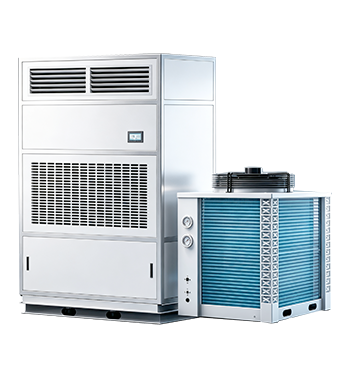
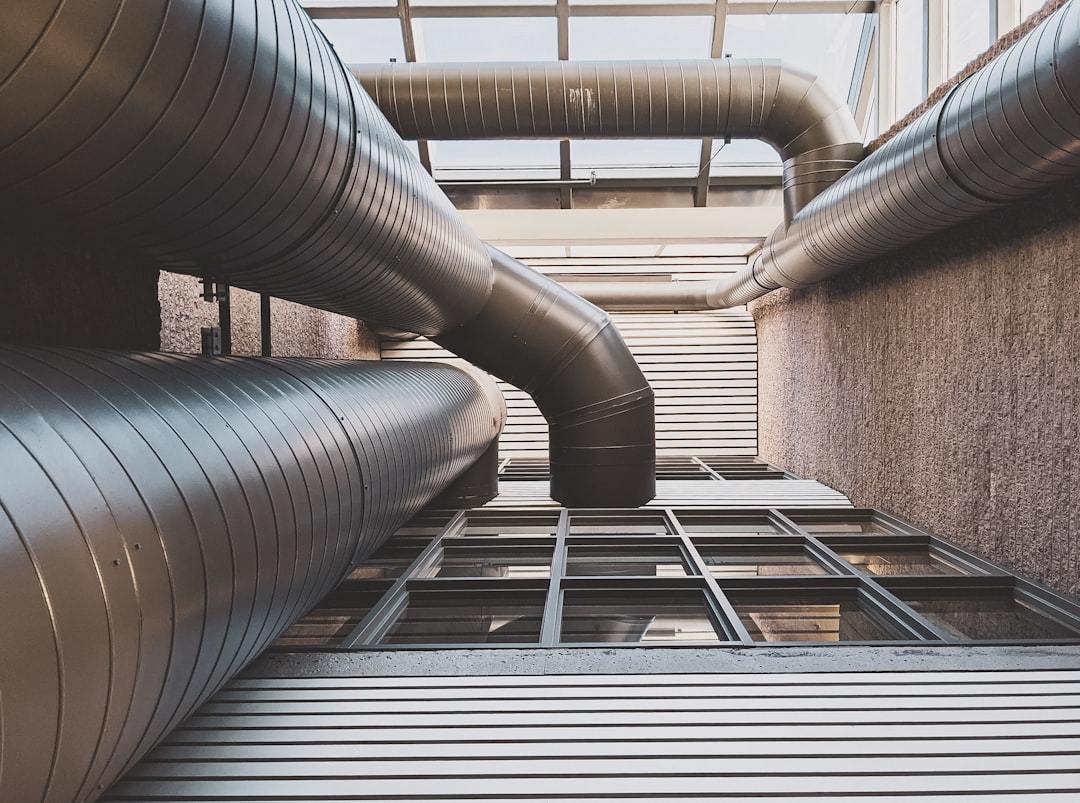
Representative project configuration
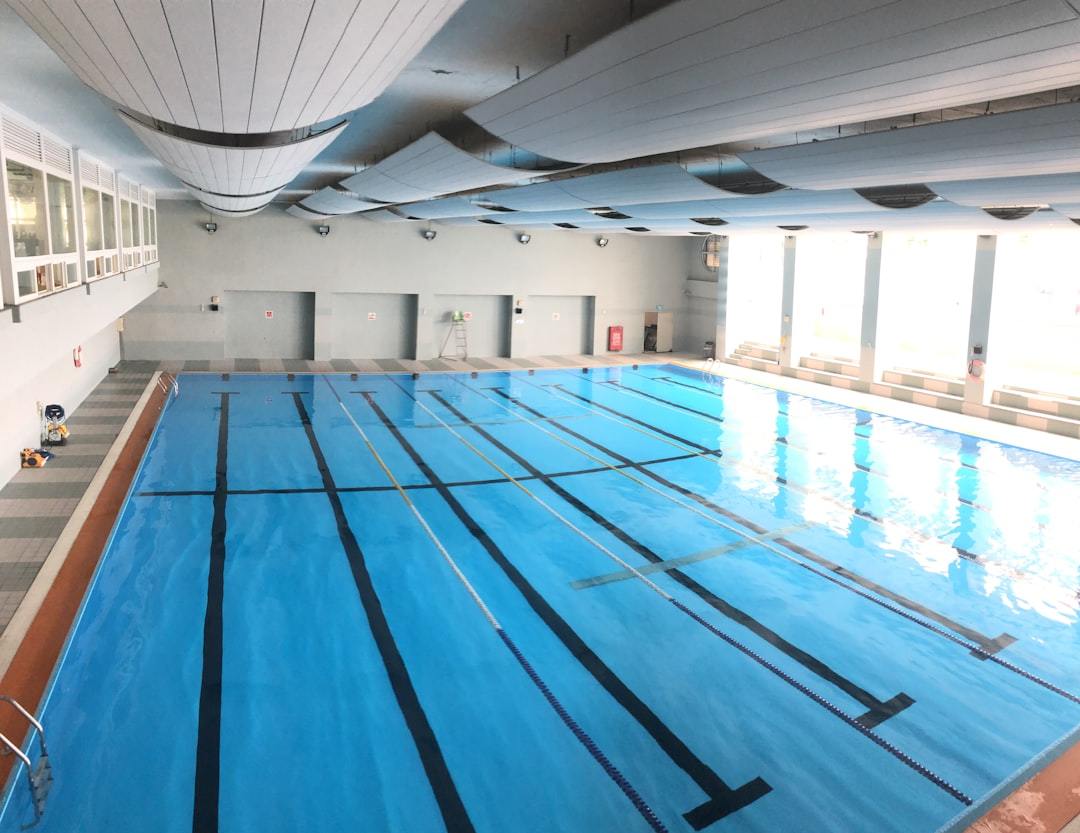
A pool hall had condensation on glazing and corrosion on steelwork. Guests wanted 28 °C air at 55% RH while the water stayed at 27 °C, which a standard air conditioner could not deliver without over-cooling the hall.
Outdoor units went on a roof plant deck, indoor units into a service corridor, condensate to a trapped waste line. Pool air is chlorinated, so coil coatings and materials were specified for it — a detail worth more than the choice between split and packaged. East Dehumidifier sizes from room volume, insulation and the moisture source rather than floor area alone.
Split versus packaged, side by side
| Aspect | Split system | Packaged unit |
|---|---|---|
| Typical capacity range | 300–1,100+ L/day in process plant | 150–1,100+ L/day |
| Capital cost | Higher, two assemblies and refrigerant work | Typically 10–25% lower |
| Installation | Qualified installer, line length and lift limits | Factory-tested, position and connect |
| Indoor noise | Low, compressor is outdoors | Higher, compressor in or near the room |
| Room heat | Rejected outdoors | Compressor heat stays in the space |
| Control | Heat, cool, dehumidify, reheat | Usually dehumidify only |
| Low-temperature duty | Limited below about 15 °C | Same condensing limit |
| Typical use | Pools, hotels, controlled process environments | Warehouses, plant rooms, job sites |
Specification check: confirm the pipe run and vertical lift between indoor and outdoor units before ordering, because both limit how far apart they can sit. If the room cannot tolerate compressor noise or heat, the premium is easy to justify; if it can, packaged is usually the better value.
Related questions
Split or packaged for your hall?
Send room volume, insulation, the moisture source and whether noise or heat matters indoors. East Dehumidifier will return both options with pipe runs and capacities costed.