What is the ideal humidity level for a lithium battery production workshop?
- Share
- Issue Time
- Sep 21,2026
Battery workshops are graded by process, not by one number. Slurry mixing runs below 5 percent RH, coating below 1 percent, cell assembly around 0.1 percent and electrolyte filling at 0.02 percent. That is minus 20 to minus 65 degrees Celsius dew point, held at 20 to 25 degrees Celsius with 20 to 50 air changes per hour.
Why the number is a gradient, not a setpoint
Lithium is the reason. Lithium-based electrode materials react with water vapour to form lithium hydroxide and hydrogen, degrading the electrode before the cell is sealed. At the electrolyte step the mechanism is worse: lithium hexafluorophosphate reacts with water to produce hydrofluoric acid, which corrodes internal components. Residual moisture in a sealed cell generates gas, causing swelling and capacity fade.
Because the tolerance differs so sharply by step, plants are zoned rather than uniform. Published process limits put slurry mixing near 5% RH, coating and calendering below 1% RH, cell assembly around 0.1% RH, and electrolyte filling at roughly 0.02% RH. The most stringent zone governs the most expensive HVAC.
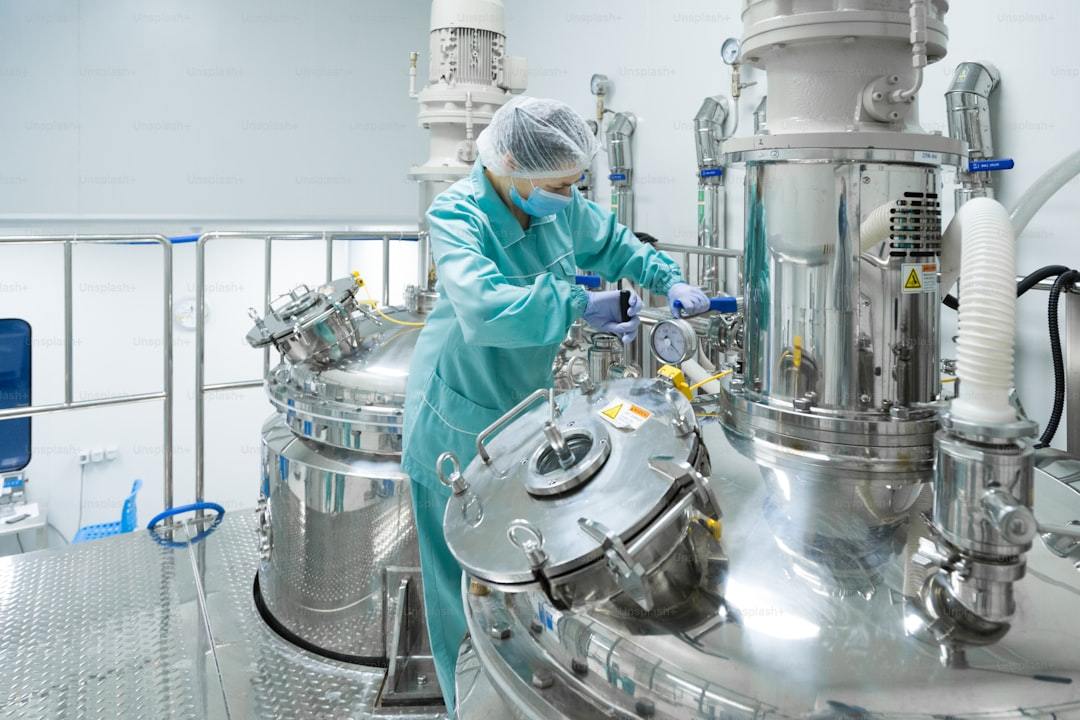

Below about 1% RH, relative humidity stops being a useful control variable — the measurement uncertainty is larger than the signal. Plants therefore specify and log dew point instead, typically −40 °C for standard lithium-ion, which is about 0.08 g/kg or under 1% RH at 22 °C. Next-generation chemistries push to −50 or −60 °C, at 0.02–0.04 g/kg.
Measurement has to match. Chilled mirror hygrometers are accurate to ±0.15 °C and are the usual recommendation below −30 °C dew point, with polymer sensors acceptable for less demanding zones. Whatever you specify, sample at the process, not at the return air grille, and alarm on deviation rather than logging it silently.
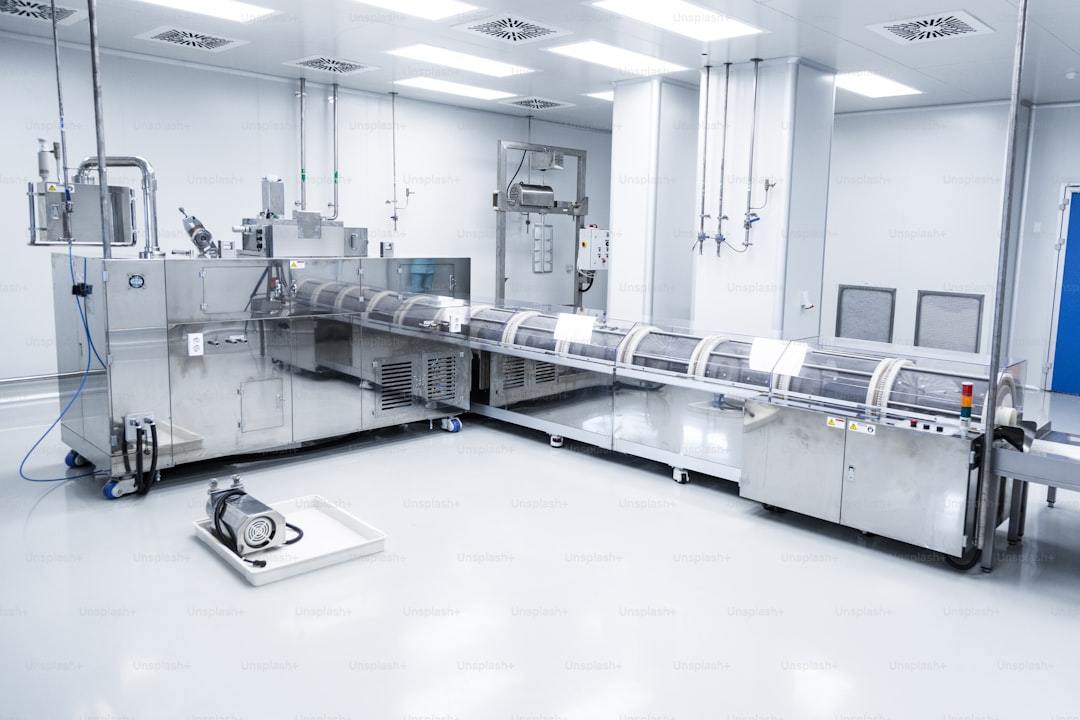
Representative project configuration
An assembly zone was specified at −40 °C dew point, 20–25 °C, with eight operators crossing an airlock each shift and a positive pressure gradient to adjacent spaces. Personnel moisture was the dominant load at roughly 0.4–0.6 kg/h.
Envelope detail mattered as much as the plant: low-permeability wall panels with welded seams, airtight door gaskets and interlocking airlocks, and sealed utility penetrations. A single door left open for ten seconds can introduce enough moisture to compromise a batch, so the airlock and the door discipline are part of the specification, not an afterthought.
Target conditions by process step
| Process step | Humidity limit | Equivalent dew point | Notes |
|---|---|---|---|
| Slurry mixing | <5% RH | −20 °C | NMP vapour extraction needed for NMC cathodes |
| Electrode coating and calendering | <1% RH | −30 to −40 °C | Continuous process; ovens sit inside the dry room |
| Cell assembly, winding, stacking | <0.1% RH | −40 to −50 °C | ISO 5–6 at the winding machines |
| Electrolyte filling | <0.02% RH | −55 to −65 °C | Flammable vapour risk; most expensive zone per m² |
| Formation and ageing | Controlled, logged | Set by cell spec | Residual moisture shows as swelling |
Cleanliness runs alongside humidity: battery dry rooms are commonly specified to ISO 14644-1 Class 7 or Class 8 overall, with tighter Class 5–6 at winding machines, because metallic particles cause internal short circuits. And note that this is a drying duty, not a humidification one — a lithium plant needs desiccant rotor or hybrid dehumidification, and humidification only appears in the adjacent general assembly and office areas. East Dehumidifier specifies the rotor plant and the make-up air treatment together, since the leakage budget and the plant capacity are the same calculation.
Related questions
Specifying a battery dry room?
Send process steps, target dew point per zone, occupancy and room dimensions. East Dehumidifier will size the rotor plant and the make-up air treatment as one calculation.