Why a Three-Phase Power Supply is Ideal for Industrial Dehumidifiers — And What You Must Know
- Share
- publisher
- Dexter
- Issue Time
- Sep 12,2026
Summary
Three-phase power gives industrial dehumidifiers smoother torque, lower current per phase and higher motor efficiency - but the control circuit still needs a neutral. Use a 3-phase 5-wire system (L1, L2, L3, N, PE). No neutral on site? EAST builds three-phase dehumidifiers that run without one, matched to 380V/50Hz or 460V/60Hz grids. Includes a NEMA MG-1 unbalance table, a 5-step pre-power checklist and the SDI-480L power profile.
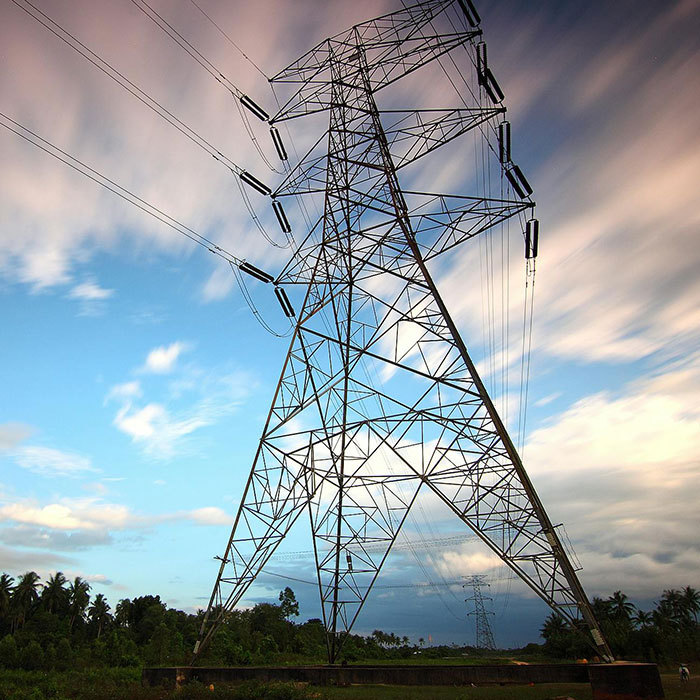
In industrial and commercial facilities, high-capacity dehumidifiers run on three-phase power for a reason: smoother power delivery, lower current per phase, and lower energy losses than single-phase supply. But connecting the machine correctly is where projects go wrong. The most common mistake is assuming that a three-phase dehumidifier needs only three wires. It usually does not. Based on EAST's field experience shipping 3-phase units to Europe, the Middle East, North America and Southeast Asia, this guide explains why three-phase supply is the right choice, why the neutral wire still matters, and how to match your local grid (380V/50Hz or 460V/60Hz) before the unit arrives on site.
Quick Answer
Use a three-phase, five-wire supply (L1, L2, L3, N, PE) for standard EAST industrial dehumidifiers. The compressor and fan are three-phase loads, but control circuits, protection devices and the display need single-phase power taken phase-to-neutral. No neutral in your facility? Tell us in advance - EAST can build a three-phase dehumidifier that runs without one. Both 380V/50Hz and 460V/60Hz grids are supported.
Why a Three-Phase Power Supply Fits Industrial Dehumidifiers
An industrial dehumidifier is essentially a refrigeration system: a compressor, a centrifugal blower and control electronics running 8-24 hours a day. At 480 L/day of water removal, the machine draws close to 7 kW - far beyond what a single-phase circuit handles comfortably. Three-phase supply solves this with constant instantaneous power (the three phases are offset by exactly 120°), so torque on the compressor never pulsates and the motor starts without a capacitor.
The efficiency gap is measurable: a three-phase motor of the same shaft power typically runs 8-15% more efficiently, because current splits across three conductors and copper losses drop sharply. Lower current also means smaller cables, less voltage drop on long runs, and less heat in the panel.

| Parameter | Single-Phase | Three-Phase |
|---|---|---|
| Power delivery | Pulsating - drops to zero twice per cycle | Constant - phases offset 120° |
| Current at 6.7 kW load | ~29 A at 230 V | ~11 A per phase at 400 V |
| Typical motor efficiency | 75-82% | 88-92% |
| Starting torque | 150-250% (needs capacitor) | 300-500% (self-starting) |
| Practical power ceiling | Up to ~3 kW per motor | 10 kW and far above |
Current figures calculated for a 6,700 W unit: single-phase I = P/V ≈ 6700/230, three-phase I = P/(√3 × V) ≈ 6700/(1.732 × 400). Values rounded.
Why Your Three-Phase Industrial Dehumidifier Still Needs a Neutral Wire
Here is the detail that trips up even experienced facility managers. The compressor and blower motor are balanced three-phase loads - line-to-line, no neutral required. So a three-wire feed looks sufficient. But open the electrical box of any standard industrial dehumidifier and you will find single-phase consumers as well:
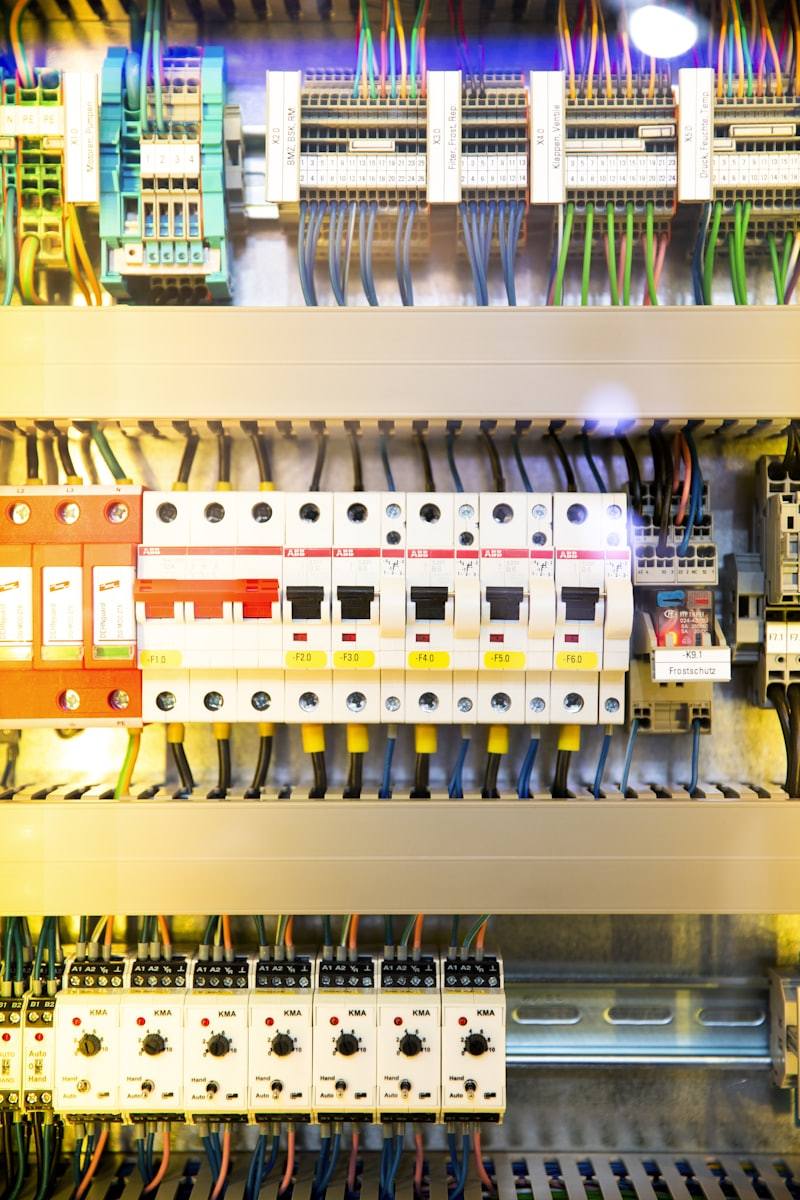
This is why EAST strongly recommends a three-phase, five-wire system (L1, L2, L3, N, PE) - the arrangement defined as a TN-S system under IEC 60364. The neutral (N) completes single-phase control circuits; the protective earth (PE) carries no current in normal operation and exists purely for fault safety.
One field detail from our commissioning records: if incoming phase sequence does not match the unit's factory setting, the phase-sequence relay trips and the controller shows fault code E3 - the machine will not start until a licensed electrician swaps two phases on the supply side.
380V/50Hz vs 460V/60Hz: Matching Your Local Grid
Three-phase grids are not identical worldwide, and frequency matters as much as voltage. The key parameter is the volts-per-hertz (V/Hz) ratio a motor is designed around. The good news: 380V/50Hz and 460V/60Hz both sit near 7.6 V/Hz, which is why EAST builds the same platform for both standards.
| Region | Three-Phase Supply | Frequency | V/Hz Ratio |
|---|---|---|---|
| China, Europe, Middle East, most of Asia | 380-400 V | 50 Hz | 7.6-8.0 |
| North America | 440-480 V | 60 Hz | 7.3-8.0 |
Two practical notes. A 50 Hz machine run on a properly matched 60 Hz supply turns about 20% faster, so capacity ratings should be confirmed for the destination grid. And never connect a 380V-rated unit to 460V at unchanged frequency: the magnetic flux climbs, the motor overheats, and insulation ages early. If your grid is unusual (415V/50Hz in some markets, for example), tell the manufacturer at order time - windings can be customized.
What Happens When the Supply Is Wrong: Unbalance, Phase Loss and E3
Three-phase motors are robust, but they are unforgiving about power quality. The most damaging condition is voltage unbalance - unequal phase-to-phase voltages. Per NEMA MG-1, a small voltage unbalance produces a current unbalance 6 to 10 times larger, and the extra negative-sequence current heats the rotor. Winding temperature rise rises roughly with the square of the unbalance percentage, and every additional 10°C cuts insulation life roughly in half.
| Voltage Unbalance | Extra Winding Heat | Motor Derating |
|---|---|---|
| 1% | Within design limit | 0.98 |
| 2% | +8-10% | 0.92 |
| 3% | +15-18% | 0.85 |
| 5% | Up to +25% | 0.75 - do not operate |
Field Warnings
Phase loss (single-phasing): a lost phase while running can leave the motor drawing locked-rotor-level current on the remaining phases - trip immediately and find the loose terminal.
Wrong phase sequence: the unit shows E3 and refuses to start. That is protection working as designed, not a machine fault.
No neutral connected: the compressor may run, but the controller, display and leakage protection lose power - the unit stays dead or runs unprotected.
Derating factors per NEMA MG-1 Figure 14-1. In practice: measure phase-to-phase voltages at the machine terminals under load, not just at the panel, and keep unbalance at or below 1%.
Pre-Power Checklist: Connecting an Industrial Dehumidifier Safely
Follow this sequence on every installation. All wiring work must be performed by a licensed electrician in line with local code.
Verify the nameplate
Confirm rated voltage, frequency, phase and rated current match your facility supply. For a 6.7 kW unit on 400 V three-phase, expect roughly 11 A per phase.
Confirm five wires arrive
L1, L2, L3, N and PE, sized per rated current and cable run length. PE must never carry working current and must not pass through any switch.
Check phase sequence
Energize and watch the controller. An E3 fault code means incorrect phase order - swap any two supply phases, never wires inside the unit.
Measure unbalance under load
Clamp all three phase currents after start-up. Keep voltage unbalance at or below 1% and investigate anything above 10% current unbalance.
Test protections
Verify the leakage protector trips and the phase-loss relay acts. Never start or stop the machine by plugging or unplugging the supply.
Real Example: Power Profile of the EAST SDI-480L
Numbers make this concrete. The SDI-480L is EAST's 480 L/day floor-standing industrial dehumidifier, built around a world-brand rotary compressor and a 5,600 m³/h centrifugal blower. On a European or Chinese 380-400 V grid it draws about 11 A per phase at 6,700 W rated power - the same load would need roughly 29 A on a single 230 V conductor, with thicker cable, more heat and larger breakers as a consequence.
Like every EAST three-phase model, it ships configured for your declared grid: 380-400V/50Hz for Europe and China, 440-480V/60Hz for North America. Facilities without a neutral can order a customized no-neutral control scheme - declared at order time, wired at the factory.

| Item | Specification |
|---|---|
| Water removal | 480 L / 1,015 pints per 24 h @ 30°C, RH 80% |
| Supply voltage | 380-400 V / 50 Hz 3-phase (EU & CN); 440-480 V / 60 Hz 3-phase (North America) |
| Rated power | 6,700 W |
| Rated current | 11.0 A per phase |
| Airflow | 3,300 CFM / 5,600 m³/h |
| Refrigerant | R410a / R407c |
| Applying area | 450-700 m² |
Frequently Asked Questions
Can a three-phase industrial dehumidifier run without a neutral wire?
Not the standard configuration. The compressor and fan will run on three phases alone, but control circuits, protection and the display need phase-to-neutral single-phase power. EAST offers factory-customized three-phase dehumidifiers that operate without a neutral - the requirement must be declared before production.
What is a three-phase five-wire (L1 L2 L3 N PE) system?
It is the physical wiring of a TN-S system under IEC 60364: three phase conductors for power, a neutral for single-phase circuits and unbalanced current, and a separate protective earth that carries current only during a fault. It is the recommended supply arrangement for industrial dehumidifiers.
Will a 380V/50Hz dehumidifier run on a 460V/60Hz supply?
A motor wound for 380V/50Hz generally operates acceptably at 460V/60Hz because the V/Hz ratio stays near 7.6, but shaft speed rises about 20% and capacity must be re-confirmed. Never assume - confirm the nameplate and the manufacturer first.
Get a Power Supply Matched to Your Facility
Tell EAST your grid voltage, frequency and whether a neutral is available - our engineers will confirm the wiring scheme, or customize a no-neutral three-phase dehumidifier for your site. Standard models ship matched to 380V/50Hz and 460V/60Hz grids, with OEM/ODM support for special requirements.